


Laugh. Sneeze. Run.
Flyte is a clinically proven, at-home treatment for bladder leaks - Surgical-level results. Without surgery.
Clinically Proven · 82% Continent in 6 Weeks · 98% Would Recommend

Meet Flyte

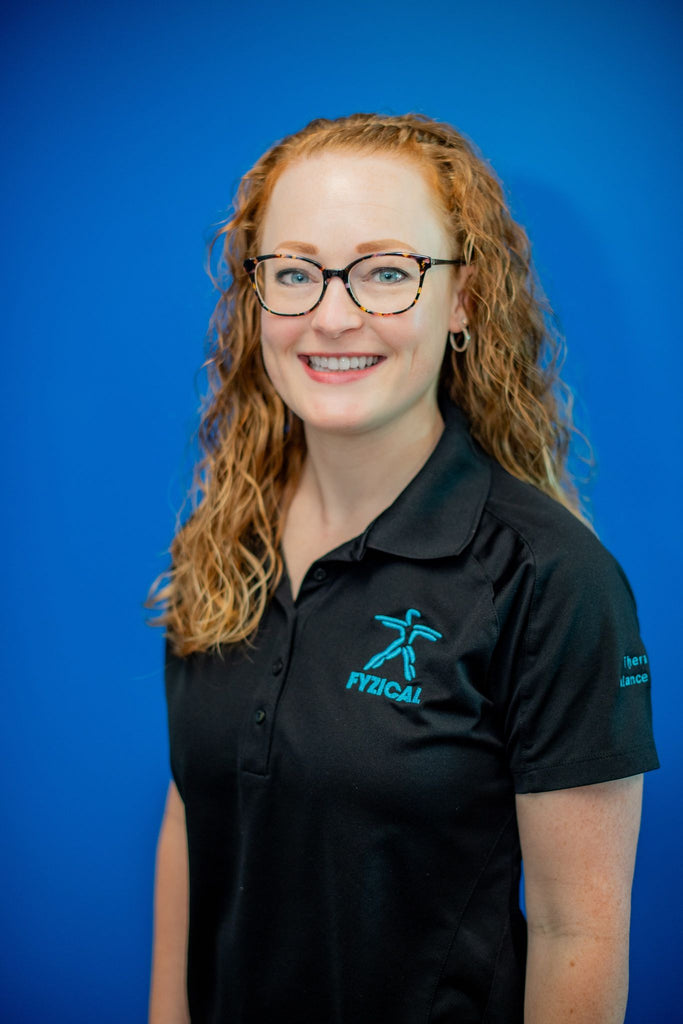
Hi, I'm Leah!
I will be your guide during your Flyte treatment program.
Click here for more information.

The Flyte Wand
Flyte® is covered with an easy-to-clean, smooth, medical-grade silicone, which also ensures comfortable insertion and removal.
The Flyte App
An optional app interface for progress tracking.
The Contraction Indicator
Easy-to-see lights show your ability to relax and contract, as measured by Flyte's® proprietary motion technology.
The Center Cue Light
This central light is your cue for when to get ready (orange) and when to squeeze (green). It's intuitive like a stop light and makes your 5-minute session simple.
The On/Off Button
Clear and conveniently placed on/off button. With only one button, you are on your way to working with Flyte®. You can tell that Flyte® is on or charging with the two small indicator lights just above and to the left of the on/off button.
The Flyte Controller
Powers the system and controls the delivery of mechanotherapy through proprietary algorithms. With one easy on/off button, you are on your way to working with Flyte®.
The Wings
The sleek curved wings ensure that Flyte® never inserts too deep.
Recommended by healthcare providers.





Backed by Clinical Evidence
Our non-invasive incontinence treatment is supported by published research and real-world data.

98%
of Flyte-users would recommend it
5
minutes per day for 6 weeks.
82%
of women continent in 6 weeks.
95%
say Flyte is easy to use.
What Women are Saying
“I’ve given birth vaginally 3 times, and my incontinence started after my first baby and only continued to get worse with each birth. I know for a fact that Flyte works - I stopped leaking with sneezing or coughing after just the first week. I used to be self-conscious and emotional about my incontinence, but now I have so much more confidence.”
Amy, 36 y/o

"I've lived with incontinence since giving birth almost 50 years ago. I've kept it secret all these years - drinking less water, going through a pack of pads a week, often missing out on life. But after Flyte, I'm not wetting my pants anymore. I don't have that constant "gotta go" feeling and I can sleep through the night again! I no longer leak when I cough or sneeze. For the first time in decades, I feel comfortable going out without worrying about odor or accidents. I feel human again."
Rosa, 72 y/o

"After using Flyte, I feel more secure, and it's so much easier for me to go out - to church, to the theater, to visit my son and daughter. I just feel more comfortable. I'm so happy my provider recommended Flyte so I would not have to use pads."
Shaquita, 53

"I've dealt with urinary incontinence for over 7 years since the birth of my child - leaking whenever I sneezed, coughed, or laughed - and was using up to 4 pads per day. I was originally interested in having surgery. I started using Flyte and just after 3 weeks, I already have no more issues. I no longer wear pads and I'm grateful for the progress I've made with Flyte."
Elana, 32

"I'm thrilled with my progress. There are days now when I don't feel like I'm going to wet myself at all. I've even been lifting weights lately and thought I would leak - but I didn't. Used to get UTIs all the time, and now i don't. I'm a happy camper."
Sally, 61
Available Exclusively Through Flyte Durable Medical Equipment Partners

You shouldn't have to plan your day around a bathroom.
Avera is an authorized Flyte partner, providing women access to FDA-cleared at-home incontinence treatment with insurance coordination.
Q&As
When your prescription is received, Avera will run an insurance check and contact you with your coverage specifics. The order will not be processed until you confirm that you are ready to move forward.
Flyte® is easy to use.
The Flyte® wand is covered in smooth medical-grade silicone to make insertion easy. We recommend applying a water-based vaginal lubricant to the wand if needed to make insertion easier.
Flyte® does not use electrical stimulation and your treatment should not be painful. During your treatment cycle you will feel Flyte's gentle vibrations.
You may experience some discomfort when you first begin to use an intravaginal device. This is normal and is similar to some of the muscle fatigue or soreness you might feel after starting any new exercise program.
Most women who have used Flyte see results within 6 weeks, with many seeing initial results as early as two weeks.
Data on file at Pelvital
Yes, there are no contraindications for the use of Flyte® with an implanted electrical nerve stimulator device. We do not use electrical stimulation that could interfere with these types of devices.
Yes, there are no contraindications for the use of Flyte® with a pacemaker.
Flyte® provides long-lasting improvement. In clinical trial, 77% of women who used Flyte® as directed for 6 weeks reported continued continence 2 years later. All women in the clinical trial were able to avoid surgical treatments for incontinence, even though they were considering surgery prior to using Flyte.
After your initial treatment, you may use Flyte® as directed by your clinician, as needed to meet your personal goals, or to maintain pelvic floor muscle tone.
Data on file at Pelvital
The Flyte® Controller analyzes data from your session to provide you with information on whether you are using Flyte correctly. You see this in the form of blue lights. The Controller also tells you when to relax and contract (squeeze and lift) your pelvic floor muscles.
With each cycle, focus on the timing and coordination of your pelvic floor muscles. The blue lights reflect how well you are squeezing and lifting your pelvic floor muscles in comparison to your muscles at rest.
If you activate these lights (even very few!) and follow along, you know you are using Flyte® and engaging your pelvic floor muscles correctly.
This is how Flyte® teaches you how to properly activate, coordinate, and strengthen your pelvic floor. Most importantly, Flyte’s® gentle mechanical vibrations (mechanotherapy) are amplifying the benefit of your squeezes (Kegels) by 39 times (data on file at Pelvital).
Flyte® is designed to strengthen weak pelvic floor muscles. To help learn how to do a Kegel to pair with Flyte®, check out our Kegel how-to guide.
Begin with breathing – inhale at rest to help relax your pelvic floor, then slowly exhale while performing steps 1 and 2.
- Step 1: Squeeze your pelvic muscles as if trying to make it to the bathroom or avoid passing gas.
- Step 2: Lift your pelvic floor muscles upward and inward (like sucking on a straw). Hold.
- Step 3: Release back to rest while inhaling.
Focus only on your pelvic floor muscles. Try to not use your abs, buttocks, or inner thighs. Avoid holding your breath.
Flyte® helps you do this in several ways. First, the wand provides you something to squeeze against, helping you “feel” where your pelvic floor muscles are. Second, Flyte’s® controller tells you when to relax and when to squeeze and shows you the difference in tone between your relaxation and your squeeze. Third, Flyte’s® use of mechanotherapy improves your muscle recruitment and the quality and durability of your exercise!
Know that there are many different techniques to help find these muscles and if you still have questions, reach out to our free Ask a PT service.
You will notice:
- Fewer leaks and less volume
- Contracting your pelvic floor muscles becomes easier with less fatigue
- Drier underwear or a reduction in the need for pads
Don’t be discouraged if you don’t see the results you want right away. It’s important to be patient and use the treatment daily for the 6-week standard treatment time. Stay positive and know that you are on a path to address the issue!
If you have any questions please contact our free Ask a PT service.
Yes, there are no contraindications for the use of Flyte® with a hip replacement.
Yes, you can use Flyte® if you have while an IUD is inserted.
Yes, Flyte® is safe to fly with. Flyte® has a lithium ion battery that is contained within the unit and can’t be removed from the device. As with other similar devices, the Federal Aviation Administration (FAA) prefers to have it in carry-on baggage, but you can also have it as part of your checked baggage, just be sure Flyte is off.
Per the FAA, “Devices containing lithium metal batteries or lithium ion batteries, including – but not limited to – smartphones, tablets, cameras and laptops, should be kept in carry-on baggage. If these devices are packed in checked baggage, they should be turned completely off, protected from accidental activation and packed so they are protected from damage.” Lithium Batteries in Baggage | Federal Aviation Administration (faa.gov).
At this time, Flyte® is not designed to be used rectally. We are currently only for intravaginal use.
Please consult your health care professional to determine how soon you can begin using Flyte after giving birth.
No. Do not use Flyte® while pregnant, or if you think you may be pregnant, unless recommended by your doctor.
Yes, but not while using a tampon or menstrual cup.
The first step is to locate your pelvic floor muscle. One technique is to imagine you are trying to keep yourself from passing gas. Or, imagine tensing your muscles as if to stop peeing mid-stream. The muscles you use are your pelvic floor muscles.
Once you’ve identified the muscle, squeeze and hold: Imagine you are trying to keep a marble from falling out of your vagina. Think about lifting and pulling in. Don’t push down. Try not to activate other muscles in your abdomen, thighs or butt. Visualize a lifting motion and breathe in and out. Don’t hold your breath. Contract these muscles for three seconds. Now relax them for three seconds. You’ve just performed a Kegel exercise.
It is very common for the number of blue lights to decrease as you continue through a 5-minute treatment session. This is usually sign of muscle fatigue and is very normal.
Ready to treat your bladder leaks?
Get ready to live your life without constantly tracking where the nearest bathroom is - fill out the form below to get Flyte today.